Environment
Greenland’s cryosphere and Arctic ecosystem
The Sermilik Station is situated within a dynamic and fragile Arctic ecosystem, profoundly shaped by snow, ice, Arctic weather, and ocean dynamics. This remote and important location offers a unique vantage point for researchers to study the interactions between Greenland’s cryosphere and its surrounding ecosystems.
As a visiting researcher, you will have direct access to critical areas for monitoring the impacts of climate change, including Greenland’s impressive flora and fauna. The station is surrounded by dramatic landscapes, featuring majestic glaciers, towering icebergs, and pristine waters, making it an ideal base for interdisciplinary environmental research.
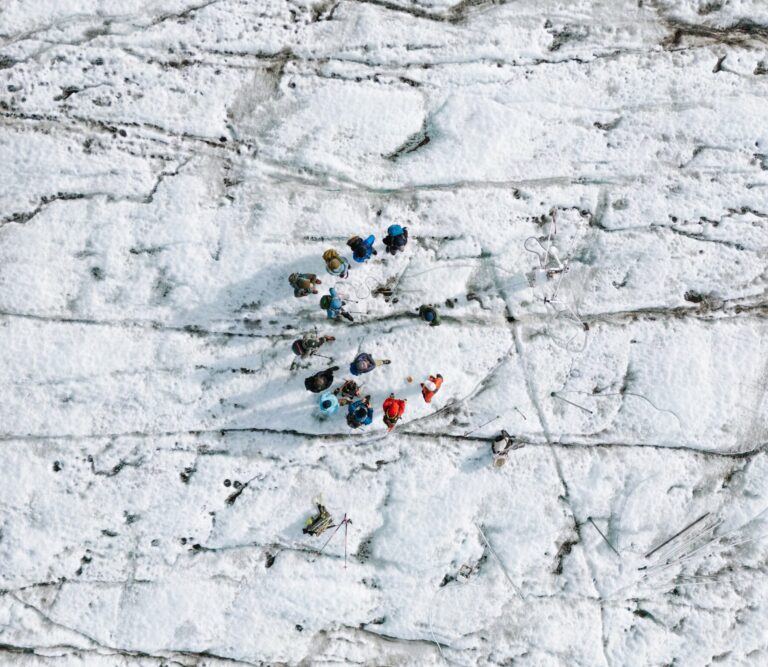
Just a 30-45 minute hike from Sermilik Station lies the Mittivakkat mountain glacier, a site with a unique and extensive research history in Greenland.
Collaboration with local communities
We strongly encourage research projects that offer direct benefits for the local communities in East Greenland. We also emphasize that humanities research groups are equally welcome at our station.
The main settlement in the region, Tasiilaq, is located approximately 15 km southeast of Sermilik Station and is home to roughly 2,000 people. Other nearby villages, such as Tiilerillaq (23 km north), are also easily accessible, providing further opportunities for community engagement.
We also actively encourage researchers to communicate their research efforts, results, and publications with the local community. We’re happy to offer support for these outreach activities whenever needed.
Greenland’s warming climate is melting ice and disrupting habitats, threatening species like polar bears and altering tundra ecosystems. Conservation efforts are crucial to preventing further biodiversity loss.
Greenland’s permafrost is thawing rapidly due to rising temperatures, releasing stored carbon and methane into the atmosphere. This accelerates climate change and disrupts ecosystems, infrastructure, and indigenous communities.
Greenland’s cryosphere, including glaciers, ice sheets, and permafrost, is rapidly shrinking due to climate change. This ice loss contributes to rising sea levels and disrupts Arctic ecosystems.
Greenland’s fjord ecosystems are changing as glacier melt increases freshwater input, altering salinity and marine life. These shifts impact biodiversity, fisheries, and the Arctic food web.
Indigenous knowledge in Greenland provides deep insights into climate patterns, wildlife behavior, and ecosystem changes. This traditional wisdom is essential for sustainable environmental management and climate adaptation.
Greenland’s glaciers are melting at an accelerating rate, contributing to global sea level rise. This ice loss influences ocean circulation and Arctic ecosystems.